
When faced with the challenge of forecasting sales for EMAAR, a company grappling with negative sales growth, I found myself navigating a maze of methods—each with its strengths, weaknesses, and quirks. Here’s how the journey unfolded:
Method 1: Historical Sales Growth
The first instinct? Look at past sales growth. But with negative growth staring back at me, I quickly realized this method wasn’t reliable. After all, you can’t base future success on a downward trajectory.

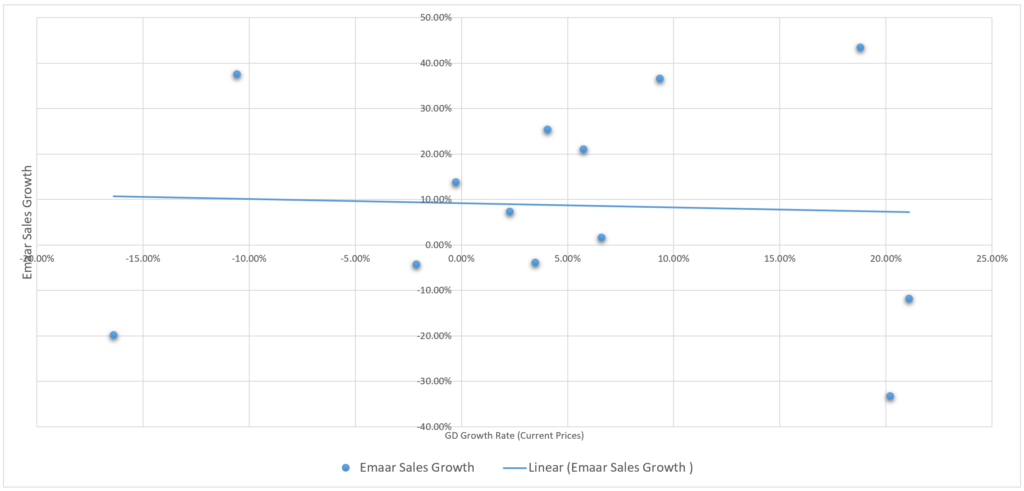
Method 2: Sensitivity to GDP Growth Rate
Next, I explored the idea of correlating EMAAR’s sales with the UAE’s GDP growth rate. It’s a solid concept—sales should, in theory, grow with a booming economy. But guess what? The correlation was weak, rendering this approach unusable.
Method 3: Regression Analysis
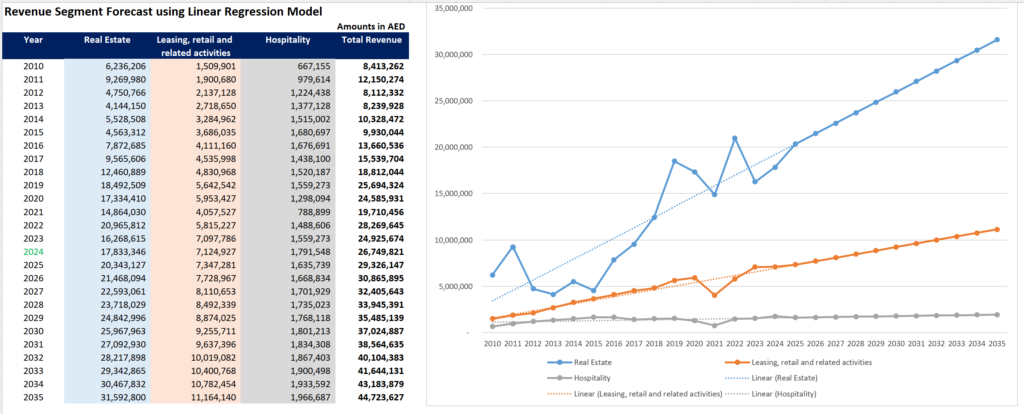
Ah, regression! I took 15 years of sales data, broken down by segment, and ran a linear regression. The result? A beautiful, smooth upward trend. It looked promising until I remembered one thing: sales can’t grow forever. This method was just too optimistic for the long haul.
Method 4: Linear Regression + Logistic Regression
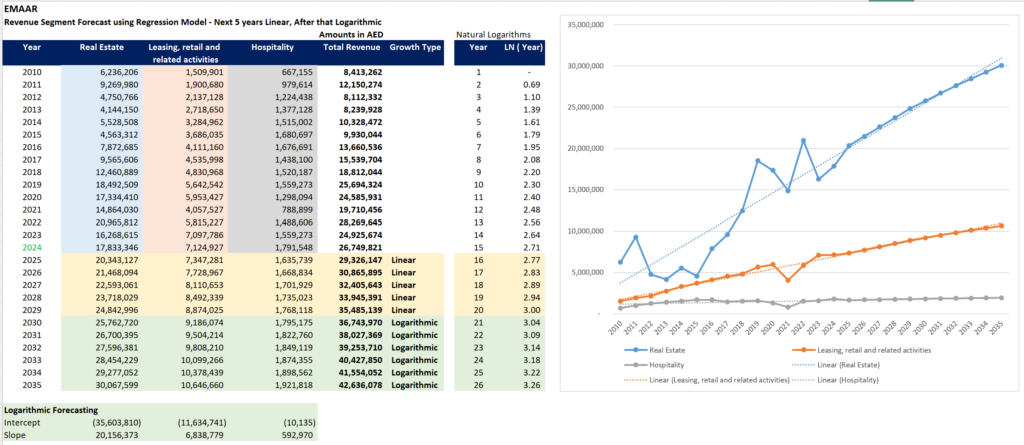
To tackle the eternal growth problem, I added a twist. For the first few years, I stuck with linear regression, transitioning to logistic regression as sales approached a natural ceiling. The result was a smooth trend—very satisfying to the analyst in me. But here’s the catch: it’s still heavily influenced by historical data and my own biases. Specifically, the assumption that sales should follow a smooth, upward-but-declining path.
Method 5: Median of Analyst Expectations
Wouldn’t it be great to use the collective wisdom of analysts? Unfortunately, I couldn’t find reliable sources for these expectations. So, this method was a no-go.
Method 6: Activity-Based Sales Forecasting
Finally, I landed on the gold standard: activity-based sales forecasting. It’s forward-looking and reliable, mapping sales based on actual business activities and drivers. The downside? It’s incredibly time-intensive. Since I needed a quick analysis, I went back to Method 4—regression.
The Verdict
For this project, Method 4 offered a balance between speed and reliability. While not perfect, it gave me a clear direction for analysis without sinking weeks into data gathering.
Suggestions Welcome!
If you have ideas or have tackled similar challenges, I’d love to hear your thoughts. Sales forecasting is as much an art as it is a science, and collaboration often sparks the best solutions.